
1 in 3
UK adults have used AI for emotional support, companionship or social interaction in the past year.
AI Security Institute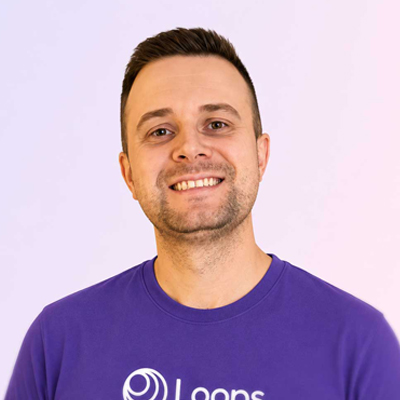
I want to be honest about something, because I think a lot of you will recognise it.
I talk to AI. Properly talk to it. Not just "write me an email" or "summarise this document". I mean late at night, when my head is full and won't empty, I open ChatGPT and I talk things through. What's on my mind. What I'm avoiding. What actually matters this week versus what just feels loud. I use it to prioritise when everything feels like a priority, which, if you have an ADHD brain like mine, is most days.
And here's the thing I've stopped being embarrassed about. It helps.
For a long time I assumed this was a slightly odd private habit. Then I started reading the research.
UK adults have used AI for emotional support, companionship or social interaction in the past year.
AI Security Instituteof 25 to 34 year olds have used a chatbot to support their mental health or wellbeing.
Mental Health UKof under-30s have told an AI something they've never told another human being.
YouGovThat first one is a government body's figure, not a tech company's. But the stat that really stopped me was this one. In a big European study of young people, 51% said it was easy to talk to a chatbot about their mental health. Only 37% said the same about a psychologist.
A chatbot beat the professionals. On openness. The one thing the whole profession is built on.
When I read that, I didn't think "how worrying". I thought, yes. That's exactly right. That's been my experience too.
No six-week wait, no intake form, no explaining yourself from the beginning to a stranger while watching the clock. It's there at 11pm on a Tuesday, which is when my brain actually wants to talk, not at 2pm on a Thursday in three weeks' time.
Or more precisely, there's no fear of judgement, which is the thing that actually shuts people up. You can say the messy version. The unflattering version. The version you'd edit before saying it to a person you have to look in the eye.
I think that one's bigger than we admit.
Years ago, I did CBT for depression. The sessions, the worksheets, the thought records, challenging the cognitive distortions, all of it. And I want to be fair here, CBT genuinely helps a lot of people, and the evidence for it is real.
But it never really worked for me. I'd sit there performing recovery, saying the things I knew were the right things to say, and leave feeling like I'd completed an admin task rather than moved anything. Maybe it was the fit. Maybe it was me. Maybe it was that opening up to a person across a room, on a schedule, has a cost that my particular brain was never willing to fully pay.
What actually got me out of depression was something completely different. Perhaps I'll share that another day. The point, for now, is this. I know first-hand what it's like when the standard route doesn't land, and how badly you'll reach for anything that meets you where you actually are. Right now, for millions of people, the thing that meets them where they are is a chatbot.
It's the half that shaped what we built with Loops.
of those emotional conversations happen on general-purpose chatbots. Tools built to answer anything, for anyone, that were never designed to hold someone who's struggling.
of people who used chatbots for mental wellbeing said they'd received unsafe content about suicide.
of licensed psychologists surveyed by the APA worry chatbots can reinforce harmful beliefs, and 89% worry they could inadvertently encourage self-harm.
It really is easier to open up to AI. And most AI was never built to be opened up to.
I won't turn this post into a pitch, but I'll tell you the principle, because it comes directly from everything above.
The AI in Loops coaches. We named it Dora. It helps you find ideas, prioritise, build momentum, get past a stuck moment. The things I was using ChatGPT for at 11pm, except Dora already knows your goals and it talks in short cards an ADHD brain can actually take in.
And it knows where the line is. Dora will never diagnose. It doesn't roleplay as a therapist. There's a moment when knowledge is not enough and what someone needs is a trained human, and we've worked incredibly hard to know exactly where that moment is. If you're ever in real distress, Loops stops coaching entirely and does one thing. Gets you to human help.
I don't think we should have to choose between the two.
And none of this replaces actual humans. Some of the most useful conversations I've had about my own brain happened at ADHD events, in rooms and calls full of people who didn't need anything explained. If talking is the thing that helps you, that's another place to do it.
If you're struggling right now, please talk to someone.
33% of UK adults used AI for emotional purposes in the past year; around 60% of that use is on general-purpose chatbots (Dec 2025)
37% of UK adults have used a chatbot for mental health or wellbeing, rising to 64% among 25 to 34s; 11% report receiving harmful information around suicide (Nov 2025)
23% of US adults under 30 have confided in an AI chatbot something they'd told no one else (2026)
51% of young Europeans (11 to 25) find it easier to discuss mental health with a chatbot than with a psychologist (37%) (early 2026)
97% of licensed psychologists worry chatbots may reinforce harmful beliefs; 89% worry they may inadvertently encourage self-harm (June 2026)
Matt has worked in design and marketing for 14 years and is fascinated by how AI will shape the future of both. Diagnosed with ADHD in his early thirties, he writes and researches the ideas that help him better understand his own brain.
At Loops, Matt helps train the AI coach, speaks with users and shapes the app around how people with ADHD actually think and work. It's the kind of tool he wishes he'd had years before his diagnosis.
Outside work, Matt lives with his wife, dog and cat, grows pine trees and dreams of one day owning a patch of land to plant them on.